
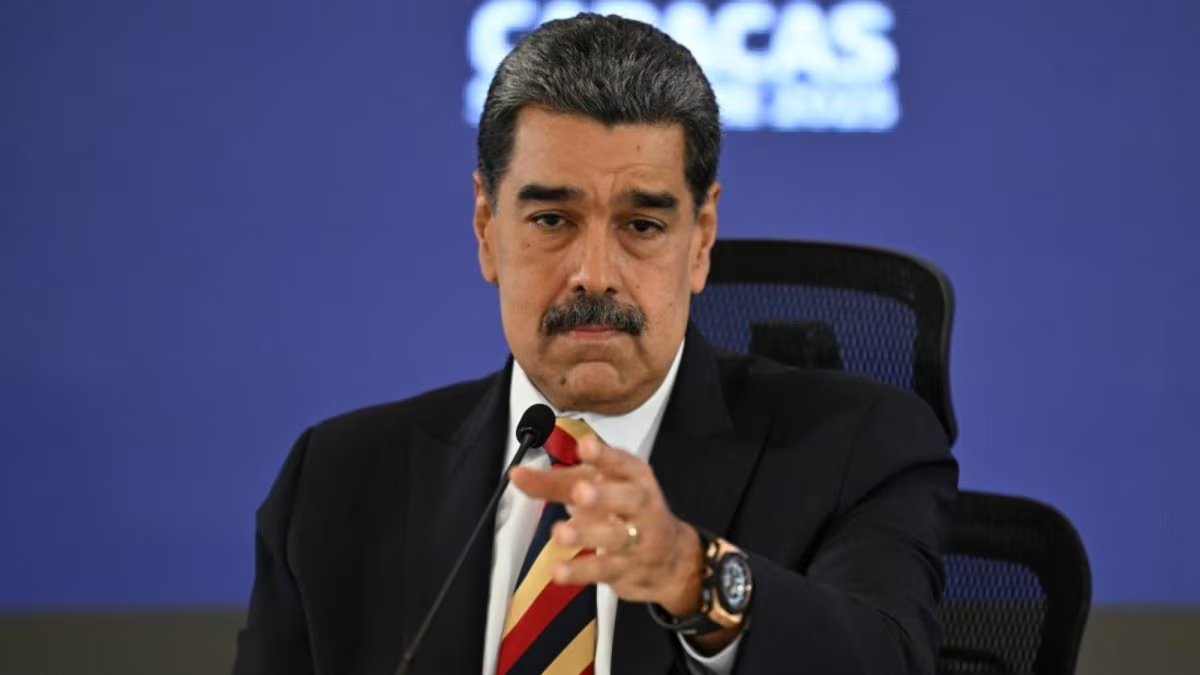
Nicolás Maduro is the president of Venezuela, a country in South America rich in oil but facing big troubles. Born in 1962 in Caracas, he started as a bus driver and union leader before jumping into politics. He became president in 2013 after his mentor Hugo Chávez passed away, promising to keep socialist dreams alive. But his time in power has sparked huge protests, tough economic times with sky-high prices, and fights with other countries who say his elections weren’t fair. Maduro holds on strong, calling himself a fighter for the people against “imperialist” foes.
| Detail | Information |
|---|---|
| Full Name | Nicolás Maduro Moros |
| Date of Birth | November 23, 1962 |
| Place of Birth | Caracas, Venezuela |
| Age (as of 2026) | 63 Years |
| Nationality | Venezuelan |
| Political Party | United Socialist Party of Venezuela (PSUV) |
| Key Roles | President of Venezuela (2013-2026); former bus driver, union leader, National Assembly president, Foreign Minister, Vice President |
Family
| Relation | Name/Details |
|---|---|
| Spouse | Cilia Flores (married July 2013; partner for nearly 20 years prior; called “first combatant”) |
| Parents | Son of a trade union leader (father); working-class family |
| Children | None publicly detailed |
Education & Early life
| Aspect | Details |
|---|---|
| Education | High school; one year of ideological training in Cuba (1986); no formal higher education |
| Early Jobs | Bus driver for Caracas subway; trade union leader |
Physical Description
Limited verified details exist, but Maduro is described as a sturdy former youth baseball player with a working-class build from his bus driver days. No official height or weight stats confirmed.
Net Worth and Finances
Net worth estimates vary widely due to Venezuela’s economic crisis and lack of transparency; no official figure confirmed, often speculated in millions amid oil wealth allegations but unverified.
Political Timeline
- 1990s: Identified as leftist radical with Cuban ties
- 2000: Elected to National Assembly
- 2006-2013: Foreign Minister, then Vice President under Chávez
- 2013: Elected president after Chávez’s death (narrow win over Henrique Capriles)
- 2013-2026: Ruled amid economic crisis, hyperinflation, protests, and international disputes; captured by US forces in 2026
Rise in Politics
Maduro entered the National Assembly in 2000 as a Chávez supporter. He served as its president from 2005 to 2006, then as foreign minister from 2006 to 2012, strengthening ties with allies like Cuba and Iran. In 2012, Chávez named him vice president shortly before his own death.
Presidency Begins
Chávez died on March 5, 2013, and Maduro assumed acting presidency. He narrowly won the April 14, 2013, election against Henrique Capriles with 50.6% of the vote, amid opposition claims of fraud, and was inaugurated on April 19. Early moves included creating the “Vice Ministry of Supreme Happiness” in October 2013 for social programs.
Crisis and Rule by Decree
From late 2013, Maduro gained decree powers to combat economic woes, hyperinflation, and shortages, extending them through 2016 via the Supreme Tribunal. Protests erupted in 2014 and 2017; he formed the National Constituent Assembly in 2017 despite violence and fraud allegations. A second term began January 10, 2019, rejected by many nations supporting Juan Guaidó as interim leader.
Final Years and Capture
Maduro ruled amid sanctions, migration waves, and disputes until U.S. forces captured him in 2026, ending his 13-year presidency marked by economic collapse and international isolation.
Learn More: Delcy Rodriguez